
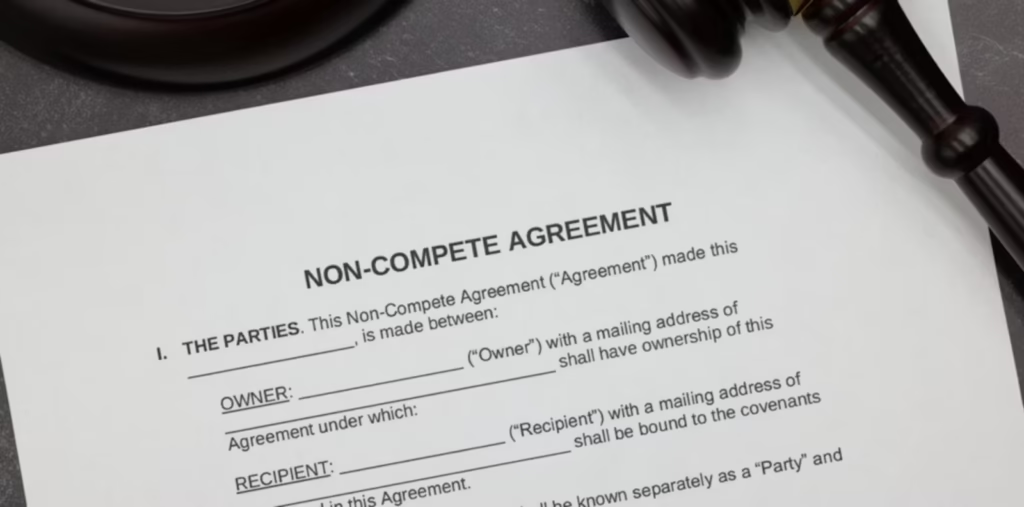
FTC Withdraws Appeals and No Longer Contesting Non-Compete Clauses
On September 5, 2025, Federal Trade Commission (FTC) Chairman Andrew Ferguson and Commissioner Melissa Holyoak announced that the FTC has withdrawn its notices of appeal in Ryan, LLC v. FTC (5th Cir.) and Properties of the Villages v. FTC (11th Cir.), thereby accepting the vacatur of the April 2024 Non-Compete Clause Rule. This rule had sought to prohibit most noncompete covenants in employment agreements.
 Although the FTC has abandoned its efforts to implement the rule, Ferguson and Holyoak emphasized the agency’s continued commitment to addressing unreasonable noncompete agreements under Section 5 of the FTC Act, which prohibits unfair methods of competition. Key developments include:
- September 4, 2025: The FTC launched a public inquiry inviting employees and other stakeholders to provide information on the use of noncompete agreements for potential enforcement actions.
- September 10, 2025: The FTC issued warning letters to several large healthcare employers and staffing firms, advising them to review their noncompete agreements to ensure any restrictions are reasonable.
Key Takeaways
- The FTC’s decision to withdraw its appeals formally concludes its attempt to enforce the Non-Compete Clause Rule.
- At the state level, laws governing noncompetition covenants remain dynamic:
- States banning noncompete clauses:
- California
- Minnesota
- North Dakota
- Oklahoma
- States adopting employer-friendly measures:
- Kansas: Enacted Kan. S.B. 241, presuming certain nonsolicitation agreements enforceable.
- Florida: Passed the CHOICE Act (H.B. 1219), creating presumptions of enforceability for specific garden leave and noncompete agreements.
- Employers should monitor both federal enforcement priorities and evolving state laws when drafting restrictive covenants.
 Did you know studies show that entrepreneurs continue to choose Arizona as the prime location to set up their enterprises? The business-friendly environment, affordable living and operating costs, and streamline regulations make it easier to start and run a business, and the Arizona Corporation Commission is the first stop on a business’ route to success.
How We Can Help
A business attorney, like Margaret, (who understands the law and the risks that businesses face, internally and externally, can provide businesses with a professional, objective, top-level view of corporate formalities. We can help business owners to ensure they are observing the formalities necessary to protect themselves against personal liability for the business’s obligations and debts and maintain essential records needed for the business’s operations—whether legally required or recommended best practices. Call us today to set up an appointment, (480) 525-6244.
